Soundproof Home Office on a Budget: Practical Noise Reduction Guide
Last Updated: 2025-12-21
Soundproof home office on a budget solutions focus on reducing perceived noise, not building a studio. Most home offices don’t need full soundproofing—they need targeted noise reduction that improves focus during calls and deep work. This guide explains how to quiet a home office using affordable methods backed by acoustic principles and building science.
Table of Contents
- Soundproofing vs Noise Reduction
- Identify Your Main Noise Sources
- Set Priorities Before Spending
- Door and Gap Sealing (High Impact)
- Window Noise Control on a Budget
- Wall Treatments That Actually Work
- Floor and Vibration Control
- Ceiling and Upstairs Noise
- Desk Placement for Noise Reduction
- Common Soundproofing Mistakes
- Budget Noise Reduction Checklist
- FAQ
- Internal Links
- Disclaimer
- Sources & Standards
Soundproofing vs Noise Reduction
True soundproofing blocks sound transmission using mass, airtight construction, and isolation. That approach is expensive. Soundproof home office on a budget strategies focus on noise reduction: sealing gaps, absorbing reflections, and managing vibration to reduce what you hear.
Identify Your Main Noise Sources
- External traffic or street noise
- Household voices and TV
- Keyboard and desk vibration
- HVAC or appliance hum
Effective noise reduction targets the loudest source first.
Set Priorities Before Spending
Budget matters. Start with changes that deliver the biggest impact per dollar:
- Seal gaps and leaks
- Reposition the desk
- Add absorption near the noise path
Door and Gap Sealing (High Impact)
Doors are the weakest point in most rooms:
- Install door sweeps to block bottom gaps
- Use adhesive weatherstripping on frames
- Add draft blockers during calls
These steps alone can reduce perceived noise significantly.

Window Noise Control on a Budget
Windows transmit high-frequency noise easily:
- Use thick curtains or moving blankets
- Install removable window inserts
- Close gaps with temporary seals
Heavy fabrics absorb sound and reduce reflections.
Wall Treatments That Actually Work
Foam panels are often misunderstood. For budget setups:
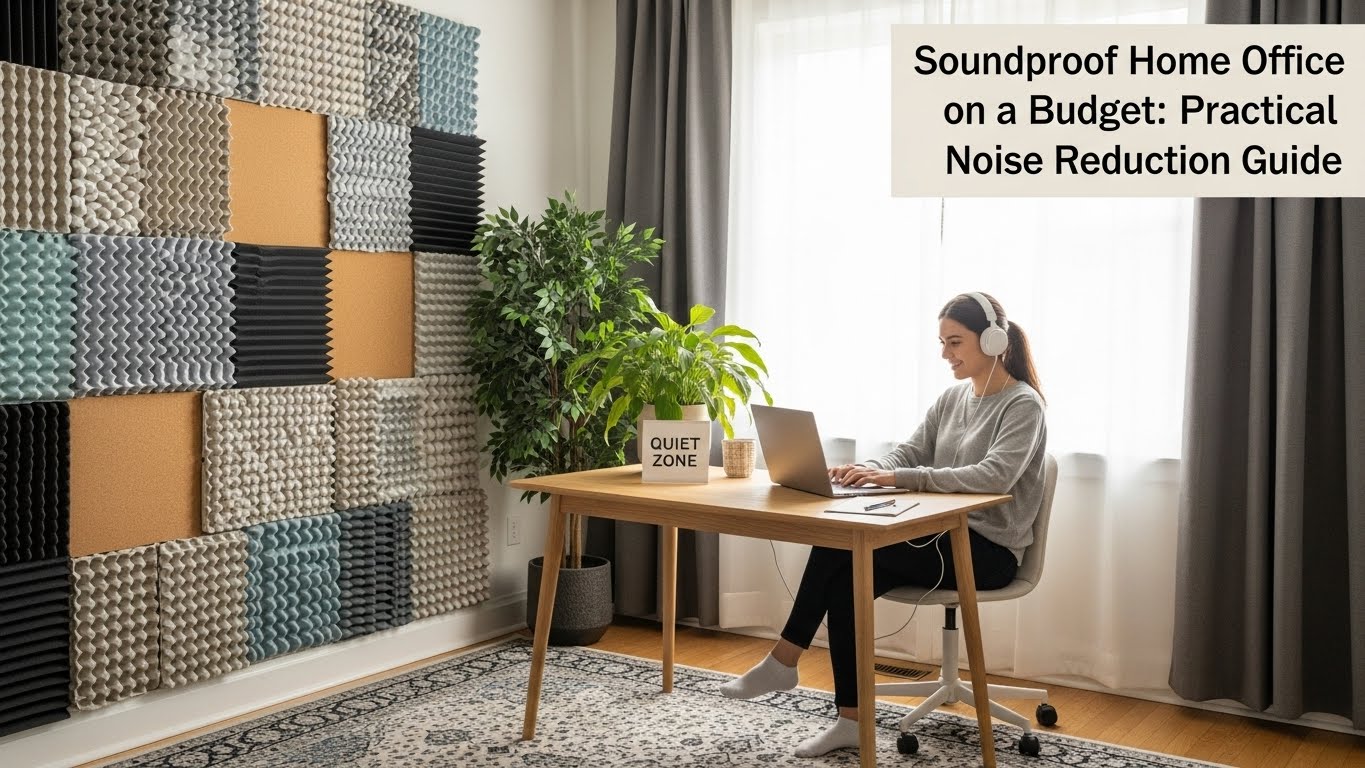
- Place absorption near your desk and microphone
- Use bookshelves with books as diffusers
- Focus on reflection points, not entire walls
Floor and Vibration Control
- Use thick rugs or carpet pads
- Add rubber feet to desks and chairs
- Isolate subwoofers or speakers
Ceiling and Upstairs Noise
Ceiling noise is hard to block cheaply. Mitigation includes:
- Soft furnishings to absorb reflections
- White noise for masking intermittent sounds
- Scheduling calls during quieter hours
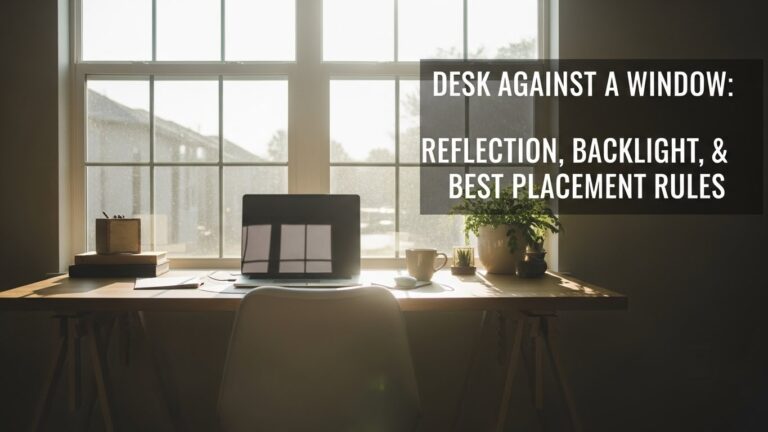
Desk Placement for Noise Reduction
Desk placement matters:
- Face away from noise sources
- Keep your back to absorptive surfaces
- Avoid placing the desk directly against shared walls
Common Soundproofing Mistakes
- Covering walls without sealing gaps
- Expecting foam to block noise
- Ignoring vibration paths
Budget Noise Reduction Checklist
- Seal door and window gaps
- Add absorption near desk
- Control floor vibration
- Optimize desk placement
- Use masking when needed
FAQ
1. Can I fully soundproof a home office cheaply?
No—but you can reduce noise enough for focus and calls.
2. Do foam panels block noise?
No—they absorb reflections, not transmission.
3. Are curtains effective?
Yes, for high-frequency noise and reflections.
4. Is white noise helpful?
It can mask intermittent sounds.
5. What’s the first thing to fix?
Door and window gaps.
Internal Links
Disclaimer
This article provides general acoustic guidance and does not replace professional soundproofing or building advice.
Sources & Standards
I’m not a medical professional, ergonomist, or workplace specialist.WorkNest exists to help everyday people build more comfortable, practical home office environments through clear explanations, visual guides, and common-sense adjustments.
Articles on this site are written from a non-expert perspective, focusing on real-world use, everyday discomforts, and widely accepted setup principles rather than clinical or professional advice.