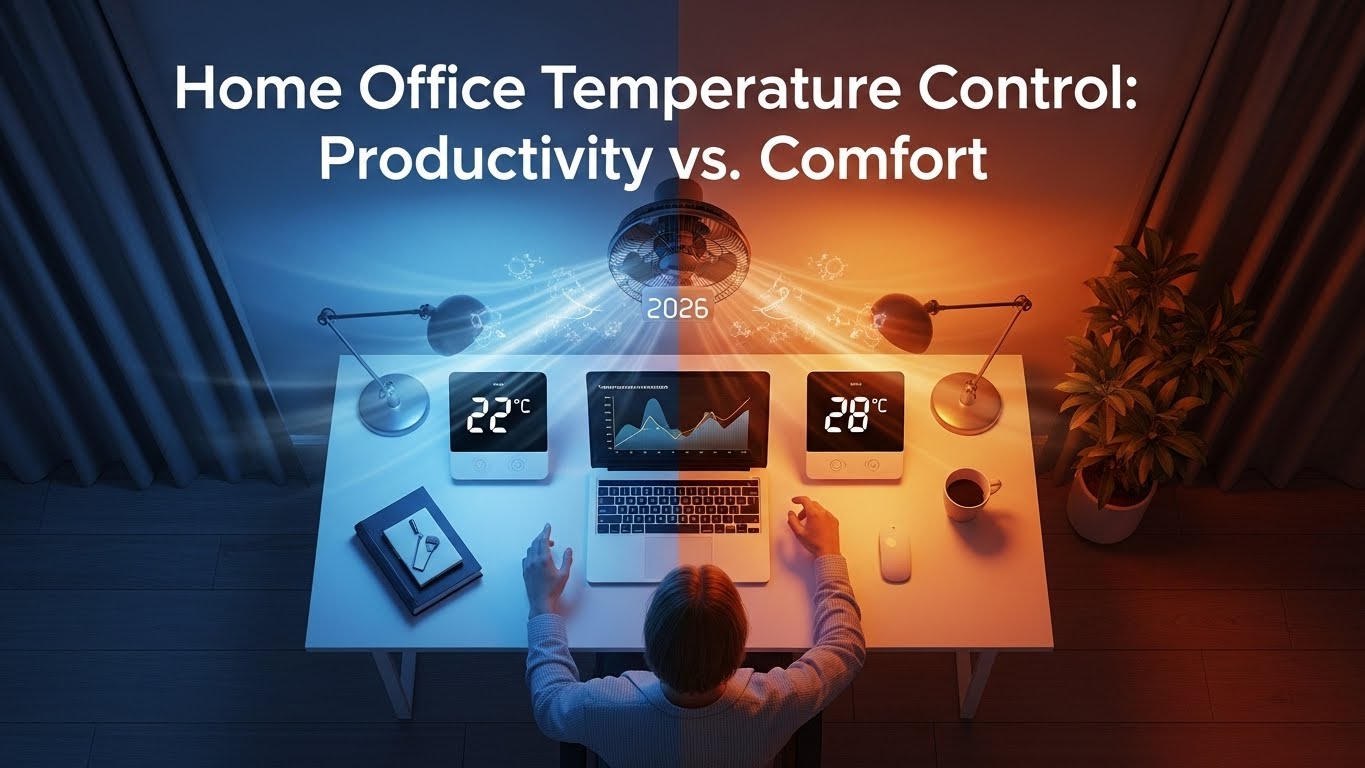
Home Office Temperature Control: Productivity vs Comfort (2026)
The optimal temperature for peak cognitive performance is between 22°C and 24°C (72–75°F). Staying within this range minimizes the metabolic cost of thermoregulation, allowing the brain to allocate more glucose to executive functions. To maintain this “Productivity Sweet Spot,” follow these 5 standards:
- Stabilize Your Core: Maintain a neutral ambient temperature to prevent shivering thermogenesis or excessive sweating.
- Protect Extremities: Ensure hands stay above 20°C (68°F) to maintain fine motor skills and typing accuracy.
- Manage Radiant Heat: Be aware of “cold walls” or direct sunlight that can cause asymmetric thermal discomfort.
- Humidity Synergy: Keep relative humidity at 40–60%; high humidity makes moderate heat feel like “Heavy Fatigue.”
- Micro-Climate Control: Use localized heating/cooling (fans or foot warmers) to adjust without shifting the whole room.
Persistent temperature issues can lead to more than just distraction. Seek advice if you experience:
- Raynaud’s-like symptoms: Fingers turning white or blue in mildly cool rooms.
- Heat Lethargy: Inability to focus or dizziness even after hydrating in a warm room.
- Chronic Muscle Tension: Back or neck pain caused by unconscious “hunching” to stay warm.
- Frequent Headaches: Often caused by dry air (low humidity) paired with high heat.
Last Updated: January 2, 2026 |
Expert Review: WorkNest Workspace Lab |
Author: WorkNest Studio Editorial Team
Home office temperature control is one of the fastest ways to improve—or quietly destroy—daily productivity. While many focus on ergonomic chairs, working in a room that is slightly too warm or cold forces the body into a state of constant thermal compensation.
The problem isn’t just extreme weather. It’s being just uncomfortable enough that your brain diverts energy to your hypothalamus (the body’s thermostat) instead of staying on task.
1. Temperature and the Metabolic Cost of Thinking
Research consistently shows that office temperature influences attention, reaction time, and error rates. When you are outside the 22–24°C range, your body initiates thermoregulation.
This process consumes metabolic energy. In a cold room, your body uses glucose to fuel non-shivering thermogenesis. In a warm room, it increases heart rate and vasodilation to shed heat. Every calorie used to keep you warm or cool is a calorie not used by your prefrontal cortex for problem-solving.
2. Cold Rooms: The Hidden Cost of “The Shiver”
Cold environments reduce finger dexterity and increase muscle tension. When your body senses cold, it triggers peripheral vasoconstriction—pulling blood away from your hands and feet to protect your core organs.
- Decreased Typing Accuracy: Cold fingers lose tactile sensitivity, leading to a 40-50% increase in typing errors.
- Cognitive Tunneling: Your brain becomes hyper-focused on the physical discomfort, breaking “Flow State.”
- Static Muscle Loading: Tensing your shoulders to stay warm accelerates the onset of neck and back pain.

3. Warm Rooms: The “Slow-Down” Effect
Warm rooms feel cozy, but they are often the enemy of analytical focus. Higher temperatures (above 26°C/79°F) increase perceived sleepiness and slow down the brain’s “processing speed.”
This is caused by thermal dehydration and increased blood flow to the skin, which can slightly reduce blood pressure and cerebral oxygenation. You don’t just feel tired; your brain is physically working slower to prevent overheating.

4. Comparison: Productive vs. Distracting Environments
| Performance Metric | Sub-Optimal (Stress State) | Productive (Neutral State) |
|---|---|---|
| Executive Function | High error rate, low persistence | High accuracy, sustained “Deep Work” |
| Motor Skills | Clumsy typing, stiff joints | Fluid, effortless movement |
| Mental Energy | “Afternoon Slump” peaks early | Stable alertness over 8+ hours |
5. FAQ
Q: Does gender affect the “optimal” temperature?
A: Yes. Studies (including those cited by NIH) show that females often perform better in slightly warmer environments (24-25°C) than males, likely due to differences in basal metabolic rates.
Q: Can a desk fan help even if the room is 24°C?
A: Yes. Light airflow helps clear the thermal envelope around your body, preventing “stagnant heat” from building up near your skin.
Q: Is 18°C (64°F) too cold for a home office?
A: For most desk-bound tasks, yes. Without physical movement, 18°C will eventually trigger vasoconstriction in the fingers, significantly slowing down your work output.
Related Guides on This Site
The Link Between CO2 and Cognitive Performance
Quiet Cooling Solutions for Deep Focus
The 2026 Home Office Ergonomics Checklist
Scientific Sources & References
- NIH: Thermal Environment and Cognitive Performance Study
- UK HSE: Workplace Temperature and Productivity Guidelines
- NIOSH: Indoor Environmental Quality and Health

I’m not a medical professional, ergonomist, or workplace specialist.WorkNest exists to help everyday people build more comfortable, practical home office environments through clear explanations, visual guides, and common-sense adjustments.
Articles on this site are written from a non-expert perspective, focusing on real-world use, everyday discomforts, and widely accepted setup principles rather than clinical or professional advice.