Home Office Scent and Air Quality Optimization: Focus, Comfort, and Productivity Guide
Last Updated: 2025-12-21
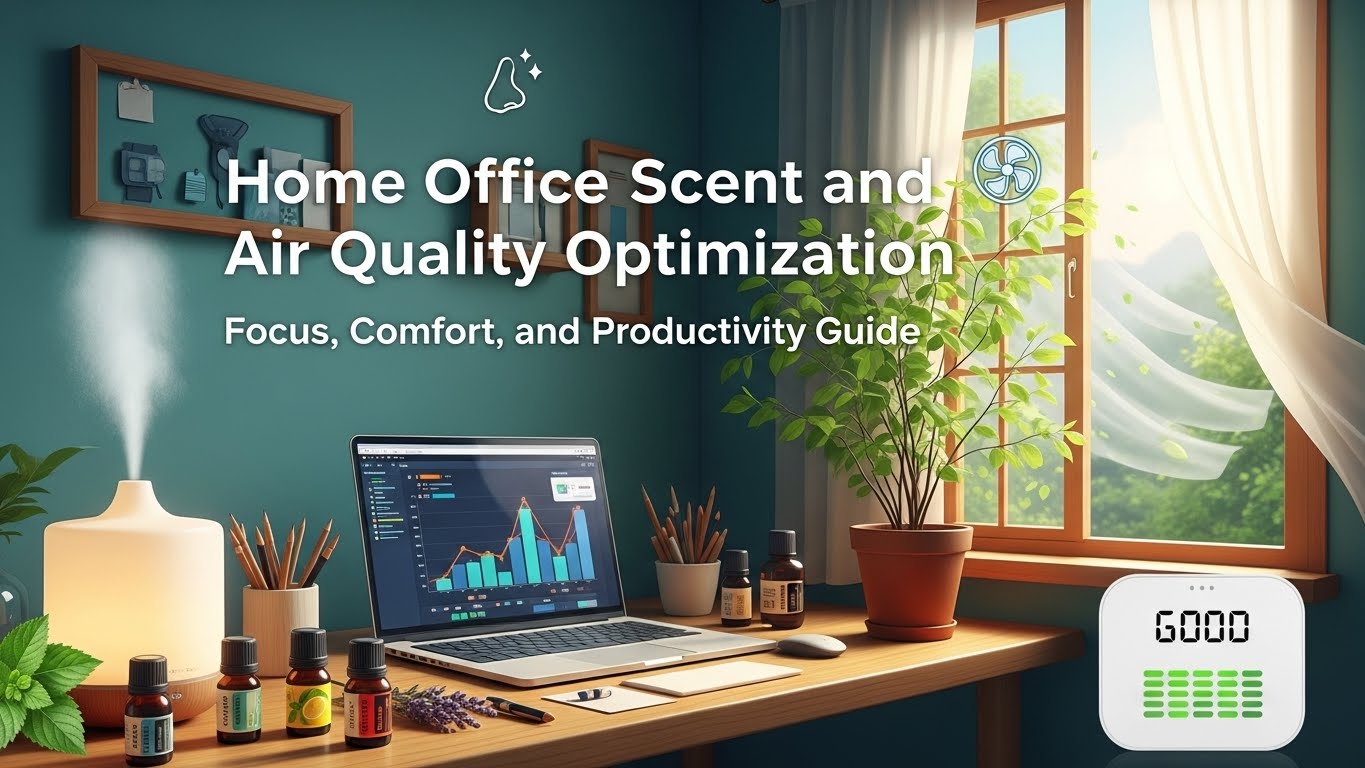
Home office scent and air quality optimization plays a critical role in focus, comfort, and long-term productivity. Poor air circulation, dry air, or overpowering scents can quietly reduce concentration and increase fatigue during long work sessions. This guide explains how to optimize home office scent and air quality using evidence-based principles, practical setup rules, and realistic daily habits.
Table of Contents
- Why Air Quality and Scent Matter in a Home Office
- Core Elements of Air Quality Optimization
- Humidity Levels for Comfortable Work
- Ventilation and Fresh Air Flow
- Scent Strategy: What Helps and What Hurts
- Tools for Home Office Scent and Air Quality Optimization
- Common Air Quality Mistakes
- Daily Optimization Checklist
- FAQ
- Internal Links
- Disclaimer
- Sources & Research
Why Air Quality and Scent Matter in a Home Office
Home office scent and air quality optimization is not about luxury—it’s about cognitive performance. Research shows that elevated CO₂ levels, low humidity, and stale air are associated with reduced attention and increased sleepiness. Unlike noise or lighting, air quality issues often go unnoticed while still impacting productivity.
Core Elements of Air Quality Optimization
Effective air quality management focuses on four elements:
- Air circulation: preventing stagnant air
- Particle control: reducing dust and allergens
- Humidity balance: avoiding overly dry or damp air
- Scent neutrality: minimizing sensory overload
Humidity Levels for Comfortable Work
Humidity has a direct effect on comfort and respiratory health. Most guidelines recommend:
- Optimal indoor humidity: 40–60%
- Below 30%: dry eyes, throat irritation
- Above 60%: increased mold risk
For home office scent and air quality optimization, a small humidifier or dehumidifier can stabilize comfort during long workdays.
Ventilation and Fresh Air Flow
Ventilation is often more important than purification:
- Open windows briefly every 1–2 hours
- Position desks to avoid blocked airflow
- Use exhaust fans in adjacent rooms if available
Even short ventilation breaks significantly reduce indoor CO₂ levels.

Scent Strategy: What Helps and What Hurts
Scent should support focus, not dominate it:
- Helpful: mild citrus, mint, eucalyptus
- Neutral: clean air, unscented environment
- Avoid: heavy florals, strong incense, constant diffusion
In home office scent and air quality optimization, less is almost always better.
Tools for Home Office Scent and Air Quality Optimization
- Air purifier with HEPA filter (for particles)
- Hygrometer to monitor humidity
- Low-output diffuser with timer
- Indoor plants (secondary support only)
Common Air Quality Mistakes
- Overusing scented candles or diffusers
- Ignoring humidity levels
- Relying on plants alone for air quality
- Never ventilating during long sessions
Daily Optimization Checklist
- Ventilate room at least twice
- Check humidity (40–60%)
- Use scent sparingly or not at all
- Keep air intake unobstructed
- Clean filters regularly
FAQ
1. Do air purifiers improve productivity?
Indirectly—by improving comfort and reducing fatigue.
2. Is scent necessary for focus?
No. Neutral air often works best.
3. Are plants enough for air quality?
No—plants provide minimal purification indoors.
4. How often should I ventilate?
Every 1–2 hours if possible.
5. Can strong scents reduce concentration?
Yes, especially during cognitive tasks.
Internal Links
Disclaimer
This article provides general indoor environment guidance and does not replace professional medical or environmental advice.
Sources & Research

I’m not a medical professional, ergonomist, or workplace specialist.WorkNest exists to help everyday people build more comfortable, practical home office environments through clear explanations, visual guides, and common-sense adjustments.
Articles on this site are written from a non-expert perspective, focusing on real-world use, everyday discomforts, and widely accepted setup principles rather than clinical or professional advice.