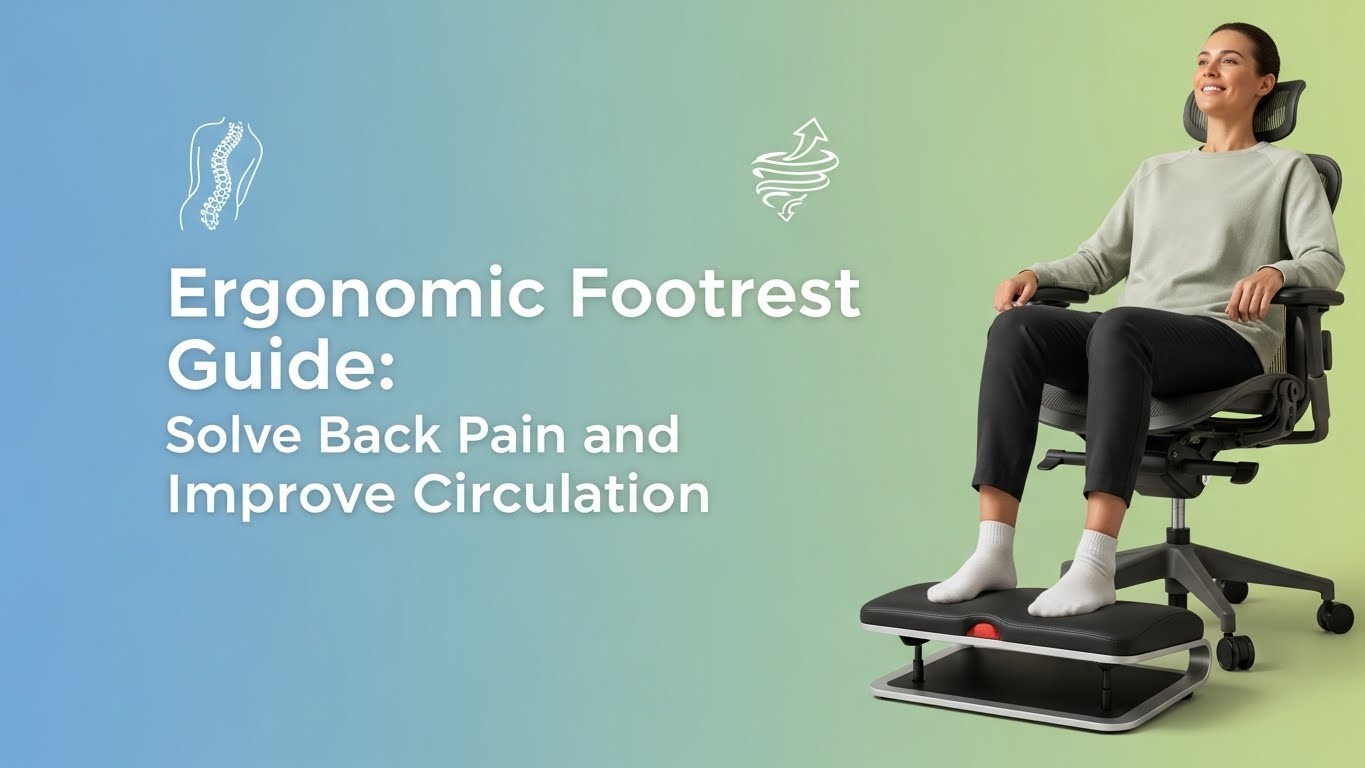
Ergonomic Footrest Guide: Solve Back Pain and Improve Circulation
Last Updated: December 27, 2025 |
Expert Review: WorkNest Ergonomic Lab |
Author: WorkNest Studio Editorial Team
An ergonomic footrest guide often begins with a simple question: why does sitting feel uncomfortable even with an expensive chair?
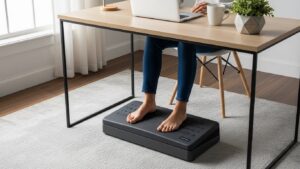
One of the most overlooked causes is unsupported feet.
When feet do not rest firmly on a surface, the thighs compress against the seat edge, restricting circulation and forcing the lower back into a slouched position.
This guide explains the biomechanics behind sitting discomfort, how foot support affects circulation and spinal alignment,
and how a properly sized footrest can reduce fatigue during long desk sessions.
Table of Contents
- 1. The Biomechanics of Sitting: Why Feet Matter
- 2. Who Actually Needs a Footrest?
- 3. The 90-90-90 Rule and Correct Footrest Height
- 4. Footrest Materials: Comfort vs Stability
- 5. Comparison: Sitting With vs Without a Footrest
- 6. Special Cases: Sciatica and Leg Swelling
- 7. Scientific References
- 8. Internal Links
- 9. Professional Disclaimer
1. The Biomechanics of Sitting: Why Feet Matter
When feet are unsupported, the pelvis tends to rotate backward.
This flattens the natural curve of the lumbar spine and shifts pressure to the intervertebral discs.
Over time, this posture increases muscle fatigue and contributes to lower back discomfort.
A footrest restores balance by transferring weight back to the sit bones,
helping the spine maintain a more neutral alignment.
2. Who Actually Needs a Footrest?
You are likely to benefit from a footrest if:
- Your feet do not reach the floor when your chair is set at proper desk height.
- You feel pressure or numbness behind the thighs.
- You frequently cross your legs to stay comfortable.
- Your ankles or lower legs swell after long workdays.
3. The 90-90-90 Rule and Correct Footrest Height
Ergonomic seating follows the 90-90-90 rule:
elbows, hips, and knees should each form roughly a 90-degree angle.
- Height: 5–15 cm (2–6 inches) for most users
- Angle: 10–20° forward tilt to keep ankles neutral
Always adjust chair height first.
The remaining gap between your feet and the floor determines the ideal footrest height.
4. Footrest Materials: Comfort vs Stability
- Memory Foam: Soft support, ideal for barefoot or sock use
- Hard Plastic: Stable, adjustable, and better for shoes
- Rocking Designs: Encourage micro-movements to support circulation
5. Comparison: Sitting With vs Without a Footrest
| Aspect | Without Footrest | With Footrest |
|---|---|---|
| Lower Back | Rounded posture | Neutral alignment |
| Circulation | Thigh compression | Improved blood flow |
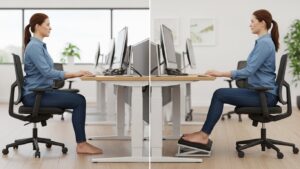
6. Special Cases: Sciatica and Leg Swelling
For people with sciatica or leg swelling, foot elevation helps reduce nerve tension
and encourages venous return.
In these cases, softer foam footrests or adjustable angled platforms are often more comfortable.
FAQ: Ergonomic Footrest Questions
Q1. Do I really need an ergonomic footrest if I already have a good chair?
A. Yes. Even high-end chairs cannot compensate for unsupported feet. A footrest completes the sitting chain by stabilizing leg position and reducing pressure on the lower back.
Q2. How high should an ergonomic footrest be?
A. Most people benefit from a footrest height between 5–15 cm (2–6 inches). The correct height allows your feet to rest flat while keeping knees level with or slightly below your hips.
Q3. Can a footrest help with circulation and leg numbness?
A. Yes. By reducing thigh compression and allowing better ankle movement, a footrest supports healthier blood flow and can reduce numbness during long sitting sessions.
Q4. Is a rocking footrest better than a fixed one?
A. Rocking footrests encourage subtle leg movement, which helps activate calf muscles and prevents blood pooling. Fixed footrests are better for users who prefer a stable surface.
Q5. Can I use household items instead of a proper footrest?
A. Temporary solutions like boxes can help, but they lack proper height adjustment and ankle angle support. Long-term use is not recommended for ergonomic health.
7. Scientific References
- Mayo Clinic – Office Ergonomics
- NIOSH – Workplace Ergonomics
- Cornell University Ergonomics – Sitting and Back Strain
8. Internal Links
Desk Height by Body Height
How to Reduce Back Pain While Working from Home
Ultimate Guide to Building a Comfortable Work-from-Home Corner
9. Professional Disclaimer
This ergonomic footrest guide is for informational purposes only and does not replace professional medical or ergonomic advice.
Consult a qualified professional if you have chronic pain or circulatory conditions.

I’m not a medical professional, ergonomist, or workplace specialist.WorkNest exists to help everyday people build more comfortable, practical home office environments through clear explanations, visual guides, and common-sense adjustments.
Articles on this site are written from a non-expert perspective, focusing on real-world use, everyday discomforts, and widely accepted setup principles rather than clinical or professional advice.