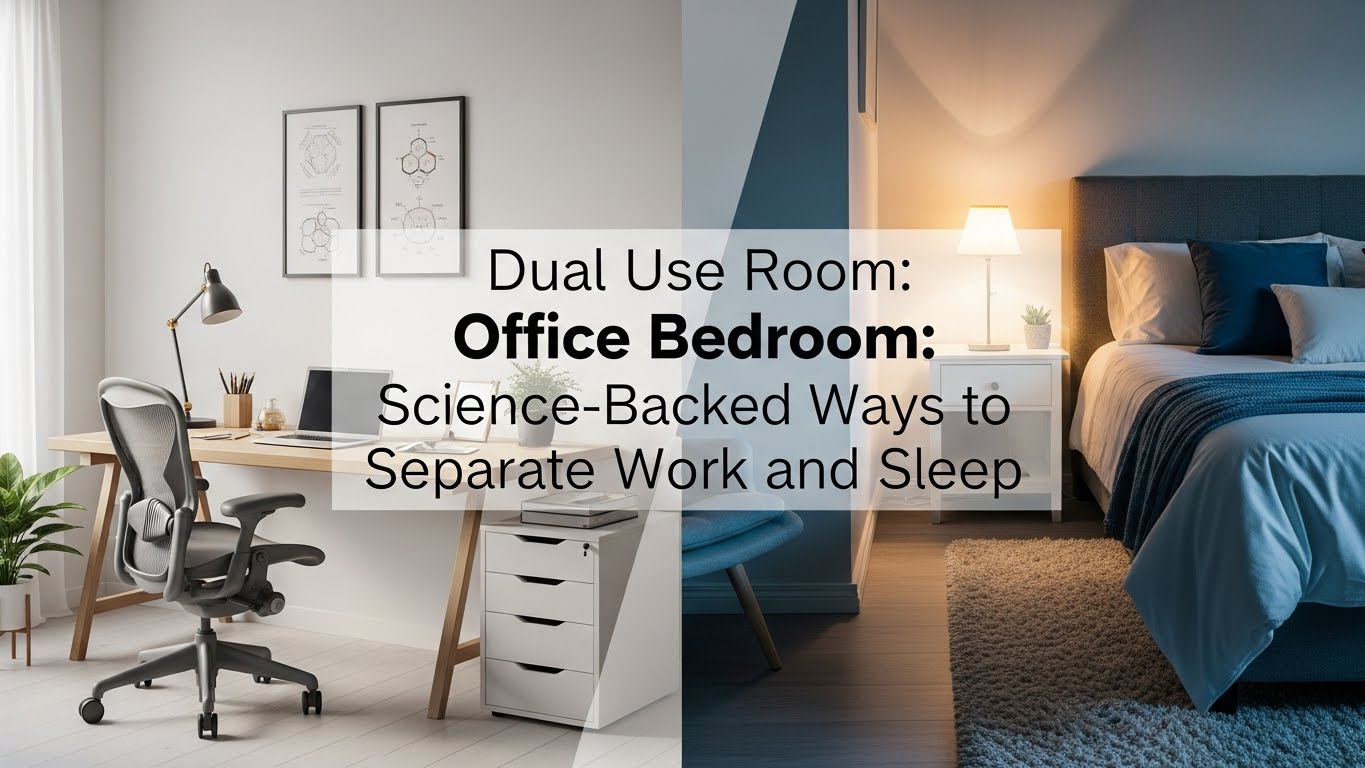
Dual Use Room Office Bedroom: Science-Backed Ways to Separate Work and Sleep
Last Updated: December 27, 2025 |
Written by: WorkNest Studio Editorial Team |
Expertise: Workspace Psychology
A dual use room office bedroom is often a necessity, but without a strict strategy, it quickly becomes a source of fatigue and poor sleep.
According to recent workplace wellness surveys, people who work from their bedrooms report significantly higher rates of insomnia and difficulty disconnecting after work.
The problem is not the room itself, but the psychological spillover between work and rest.
In this guide, we share a practical zoning framework developed while managing multiple WordPress sites from a single small bedroom—designed to preserve daytime productivity while protecting sleep quality at night.
Table of Contents
- 1. The Science: Why Your Brain Struggles with Dual Use Rooms
- 2. Real Experience: The Bed-to-Desk Trap
- 3. The Invisible Wall Strategy: Physical Zoning
- 4. Lighting as a Circadian Switch
- 5. Comparison: Poor vs Optimized Bedroom Office Layouts
- 6. Daily Rituals to Close Your Office
- 7. FAQ
- 8. Sources & References
- 9. Disclaimer & Medical Notice
1. The Science: Why Your Brain Struggles with Dual Use Rooms
The human brain relies heavily on contextual cues.
When the same space is used for both work and sleep, the brain struggles to determine which state it should be in.
This confusion can suppress melatonin production at night and elevate cortisol during the day, leading to poorer sleep and reduced focus.
To solve this, the goal is to create a sensory separation between the two functional areas—even when walls are not available.
2. Real Experience: The Bed-to-Desk Trap
Many people underestimate how damaging it is to work directly from the bed.
During early remote work phases, it is common to start answering emails or checking analytics late at night simply because the workspace is always visible.
One effective rule that consistently helps is a visual blackout policy:
if the monitor is visible from the bed, the workday has not truly ended.
Simply rotating the desk or blocking the line of sight can noticeably improve sleep quality within days.
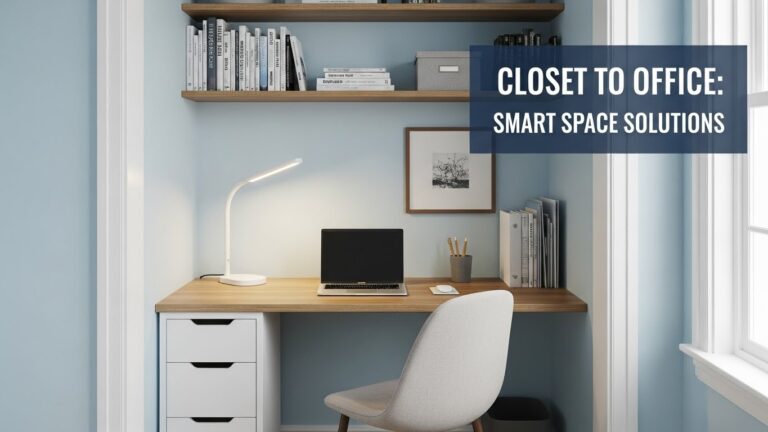
3. The Invisible Wall Strategy: Physical Zoning
You do not need construction work to create separation.
Micro-zoning techniques are often enough:
- The Rug Method: A dedicated rug under the desk defines the work zone.
- The Back-to-Bed Rule: The desk should face away from the bed.
- Vertical Boundaries: Shelves or folding dividers help block visual overlap.
For precise positioning and clearance recommendations, see the
Desk Placement Guide.
4. Lighting as a Circadian Switch
Lighting is one of the most powerful tools in a dual use room office bedroom.
Using a single light source for both work and rest sends mixed signals to the brain.
- Work Mode: 4000–5000K neutral or cool light to maintain alertness.
- Rest Mode: 2700K warm light to support melatonin release.
Using separate lamps—or automated smart bulbs—allows the room to switch modes automatically.
Equipment recommendations are covered in the
LED Desk Lamp Guide.
5. Comparison: Poor vs Optimized Bedroom Office Layouts
| Feature | Poor Setup | Optimized Setup |
|---|---|---|
| Desk Orientation | Facing the bed | Facing wall or window |
| Lighting | Single ceiling light | Task + ambient lighting |
| Visual Clutter | Work items visible from bed | Work items hidden at night |
6. Daily Rituals to Close Your Office
- Cover or turn off the monitor after work.
- Store the laptop out of sight.
- Change lighting immediately when work ends.
For managing energy throughout the day, see the
Standing Sitting Hybrid Workflow.
7. FAQ
Is it okay to work from bed occasionally?
No. This breaks the psychological association between bed and sleep.
What if the room is too small for dividers?
Use vertical zoning and keep the bed area visually minimal.
8. Sources & References
- Sleep Foundation – Bedroom Environment
- NIH – Sleep, Light, and Environment
- NIOSH – Ergonomics and Home Workspaces
9. Disclaimer & Medical Notice
This content is for educational purposes only and does not replace professional medical or ergonomic advice.
Always consult qualified professionals regarding sleep disorders or health conditions.
I’m not a medical professional, ergonomist, or workplace specialist.WorkNest exists to help everyday people build more comfortable, practical home office environments through clear explanations, visual guides, and common-sense adjustments.
Articles on this site are written from a non-expert perspective, focusing on real-world use, everyday discomforts, and widely accepted setup principles rather than clinical or professional advice.