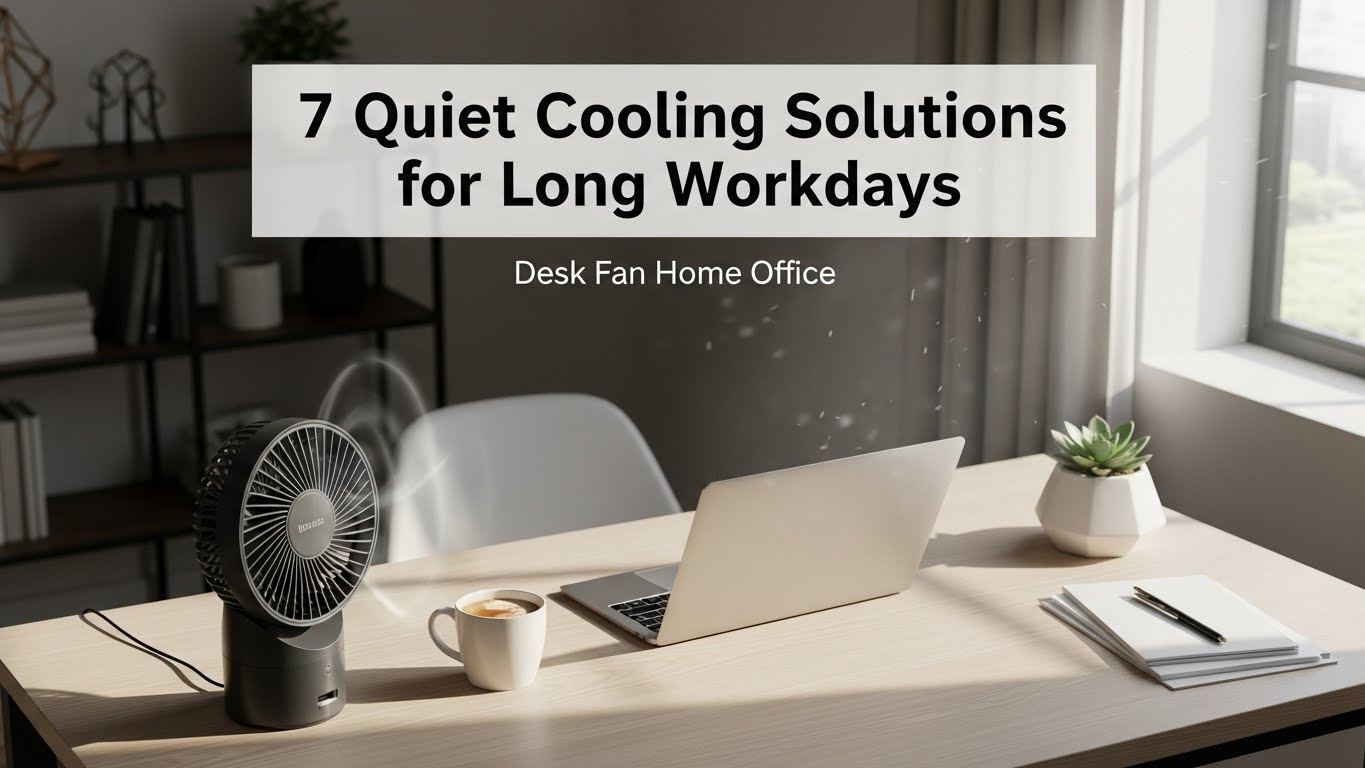
Desk Fan Home Office: 7 Quiet Cooling Solutions for Long Workdays
Last Updated: 2025-12-16
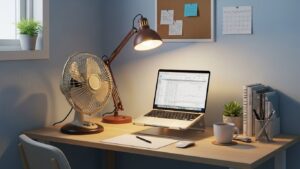
Desk fan home office setups are one of the most effective ways to stay comfortable and focused during long workdays—especially in small rooms where heat builds up quickly. When air circulation is poor, even mild warmth can reduce concentration, increase fatigue, and make extended sitting uncomfortable. This guide explains how to choose and position a desk fan home office setup using evidence-based comfort and airflow principles.
Table of Contents
- Why Desk Fan Home Office Cooling Improves Productivity
- How Heat Affects Focus in Home Offices
- Types of Desk Fans for Home Office Use
- Understanding Noise Levels (dB) for Desk Fans
- Best Desk Fan Placement for Effective Cooling
- Alternatives to Desk Fans in Small Rooms
- Daily Cooling Routine for Long Work Sessions
- Troubleshooting Common Desk Fan Problems
- Quick Buyer’s Checklist
- FAQ
- Internal Links
- Disclaimer
- Sources & Research
Why Desk Fan Home Office Cooling Improves Productivity
Desk fan home office cooling works because thermal comfort directly affects mental performance. Research from indoor environmental studies shows that even small increases in perceived heat can reduce alertness and slow reaction times. A properly chosen desk fan home office setup improves air movement around your body, helping regulate skin temperature without overcooling the room.
How Heat Affects Focus in Home Offices
Home offices often lack the airflow of commercial buildings. Heat accumulates from:
- Electronics (monitors, laptops, chargers)
- Limited ventilation
- Direct sunlight through windows
Studies referenced by ASHRAE indicate that discomfort begins to rise when air movement is insufficient, even if room temperature remains moderate.
Types of Desk Fans for Home Office Use
Not all fans are suitable for desk fan home office environments. The most effective types include:
- USB desk fans: compact, low power, ideal for laptops
- Oscillating desk fans: distribute airflow evenly
- Tower-style compact fans: quiet and space-efficient
- Clip fans: useful for tight desk setups
Understanding Noise Levels (dB) for Desk Fans
Noise is a major concern in a desk fan home office setup. For focused work:
- Below 30 dB: virtually silent, ideal for calls
- 30–40 dB: soft background noise
- Above 45 dB: distracting for most people
Many modern brushless motor fans operate efficiently under 35 dB at low to medium speeds.
Best Desk Fan Placement for Effective Cooling
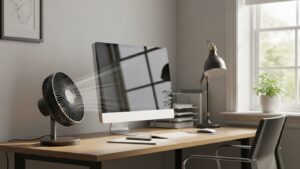
Correct placement matters more than raw power. Follow these desk fan home office rules:
- Position the fan to the side, not directly facing your face
- Aim airflow across your torso or forearms
- Avoid blowing air directly into your eyes
- Keep the fan below monitor height to reduce noise perception
Alternatives to Desk Fans in Small Rooms
If a desk fan is not suitable, consider:
- Window ventilation during breaks
- Ceiling or wall-mounted circulation fans
- Lowering monitor brightness to reduce heat output
Daily Cooling Routine for Long Work Sessions
- Ventilate the room before work
- Use low-speed fan during focused sessions
- Increase airflow briefly during breaks
- Turn off the fan during calls if needed
Troubleshooting Common Desk Fan Problems
• Fan feels too cold
Reduce speed or redirect airflow away from your face.
• Fan noise is distracting
Lower speed or move the fan farther from your ears.
• Airflow feels uneven
Use an oscillating model or adjust placement angle.
Quick Buyer’s Checklist
- Noise level under 40 dB
- Adjustable speed settings
- Compact footprint
- Stable base or secure clip
- Low power consumption
FAQ
1. Is a desk fan home office setup better than air conditioning?
For personal comfort and energy efficiency, desk fans are often more practical.
2. Can desk fans improve productivity?
Yes—improved thermal comfort supports sustained focus.
3. Are USB fans powerful enough?
They work well for personal cooling in close range.
4. Should I leave the fan on all day?
Low-speed use is fine, but short breaks without airflow help avoid dryness.
5. Do desk fans increase noise fatigue?
Not when kept under 40 dB and positioned correctly.
Internal Links
Disclaimer
This article provides general comfort and environmental information. It is not medical or HVAC advice.
Sources & Research

I’m not a medical professional, ergonomist, or workplace specialist.WorkNest exists to help everyday people build more comfortable, practical home office environments through clear explanations, visual guides, and common-sense adjustments.
Articles on this site are written from a non-expert perspective, focusing on real-world use, everyday discomforts, and widely accepted setup principles rather than clinical or professional advice.