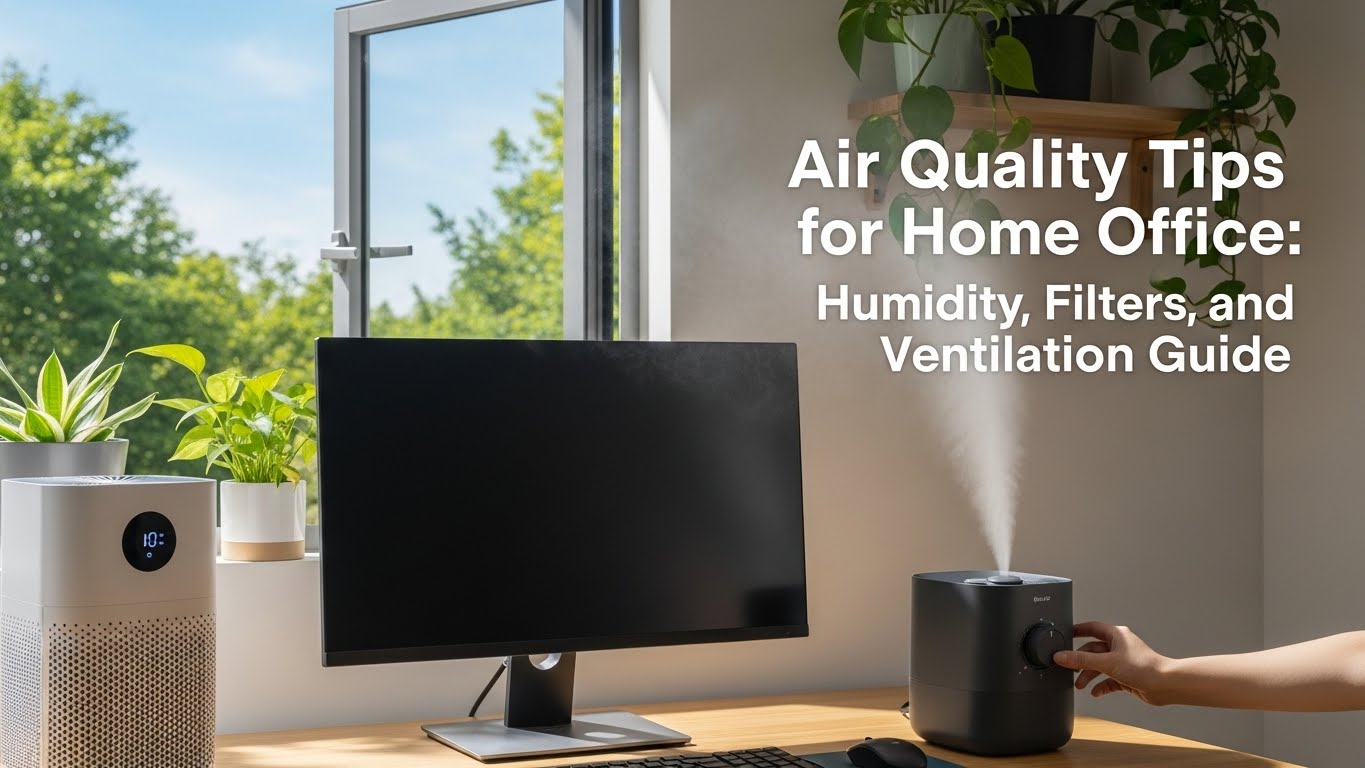
Air Quality Tips for Home Office: Humidity, Filters, and Ventilation Guide
Last Updated: 2025-12-15
Air quality tips for home office setups are often overlooked, yet indoor air directly affects concentration, fatigue, headaches, and long-term comfort. In small apartments or sealed rooms, carbon dioxide buildup, dry air, and fine particles can quietly reduce productivity. This guide explains how humidity, air filtration, and ventilation work together to create a healthier and more focused home office environment.
Table of Contents
- Why Air Quality Matters for Focus and Productivity
- Ideal Humidity Levels for Home Offices
- CO₂ Buildup and Mental Fatigue
- Air Filters and Purifiers: What Actually Works
- Ventilation Strategies for Apartments
- Do Plants Improve Home Office Air?
- Daily Air Quality Maintenance Routine
- Troubleshooting Common Air Quality Issues
- Quick Checklist
- FAQ
- Internal Links
- Disclaimer
- Sources & Research
- Author
Why Air Quality Matters for Focus and Productivity
Research consistently shows that poor indoor air quality reduces cognitive performance. Elevated carbon dioxide levels, dry air, and fine particulate matter increase sleepiness and reduce decision-making speed. In a home office—especially a small or poorly ventilated one—these factors accumulate faster than most people realize.
Ideal Humidity Levels for Home Offices
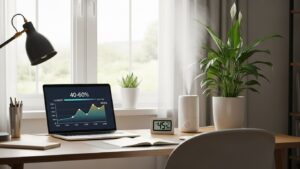
Humidity plays a critical role in comfort and respiratory health. Most indoor air quality research points to an optimal range of 40–60% relative humidity for working environments.
- Below 40%: dry eyes, throat irritation, static electricity
- 40–60%: optimal comfort and reduced airborne particle movement
- Above 60%: increased risk of mold and dust mites
CO₂ Buildup and Mental Fatigue
Carbon dioxide levels rise quickly in enclosed rooms. Studies from indoor environmental research show that CO₂ concentrations above 1,000 ppm are associated with reduced alertness and slower cognitive processing.
- Outdoor air: ~400 ppm
- Well-ventilated room: 600–800 ppm
- Poorly ventilated home office: 1,200+ ppm
Regular ventilation breaks—even short ones—can significantly improve perceived energy and focus.
Air Filters and Purifiers: What Actually Works
Not all air purifiers improve productivity. Focus on filtration efficiency rather than marketing terms.
- HEPA filters: capture fine particles (PM2.5) effectively
- Activated carbon: reduces odors and some gaseous pollutants
- CADR rating: should match room size
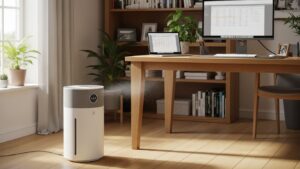
For a home office, a small-to-medium HEPA purifier is usually sufficient when combined with ventilation.
Ventilation Strategies for Apartments
Ventilation doesn’t require complex systems. Simple strategies include:
- Opening windows for 5–10 minutes every 1–2 hours
- Using exhaust fans during breaks
- Positioning the desk to avoid stagnant corners
Cross-ventilation—opening two windows briefly—can rapidly reduce CO₂ levels.
Do Plants Improve Home Office Air?
Plants can improve perceived comfort and humidity slightly, but research shows they are not a replacement for ventilation or filtration. Their strongest benefit is psychological—reducing stress and improving mood.
Daily Air Quality Maintenance Routine
- Ventilate the room before starting work
- Check humidity once per day
- Run air purifier on low during focused sessions
- Ventilate again during lunch or long breaks
Troubleshooting Common Air Quality Issues
• Feeling sleepy in the afternoon
Likely CO₂ buildup—open a window or leave the room briefly.
• Dry eyes or throat
Humidity may be below 40%; consider a humidifier.
• Stuffy or stale air
Increase ventilation frequency or adjust desk placement.
• Lingering odors
Use activated carbon filtration in addition to HEPA.
Quick Checklist
- Humidity maintained at 40–60%
- Regular ventilation breaks
- HEPA filtration for fine particles
- Desk not placed in stagnant air zones
- Daily air refresh routine
FAQ
1. Does air quality affect productivity?
Yes—studies link better air quality to improved focus and decision-making.
2. Is a humidifier necessary?
Only if indoor humidity regularly drops below 40%.
3. How often should I ventilate?
Every 1–2 hours for 5–10 minutes is effective.
4. Are air purifiers worth it?
Yes, especially in small or poorly ventilated spaces.
5. Can plants replace air purifiers?
No—plants complement but do not replace filtration or ventilation.
Internal Links
Disclaimer
This content provides general indoor air quality guidance. It is not medical or environmental engineering advice.
Sources & Research
Author
Home Office Setup Project — Evidence-Based Environmental Design

I’m not a medical professional, ergonomist, or workplace specialist.WorkNest exists to help everyday people build more comfortable, practical home office environments through clear explanations, visual guides, and common-sense adjustments.
Articles on this site are written from a non-expert perspective, focusing on real-world use, everyday discomforts, and widely accepted setup principles rather than clinical or professional advice.