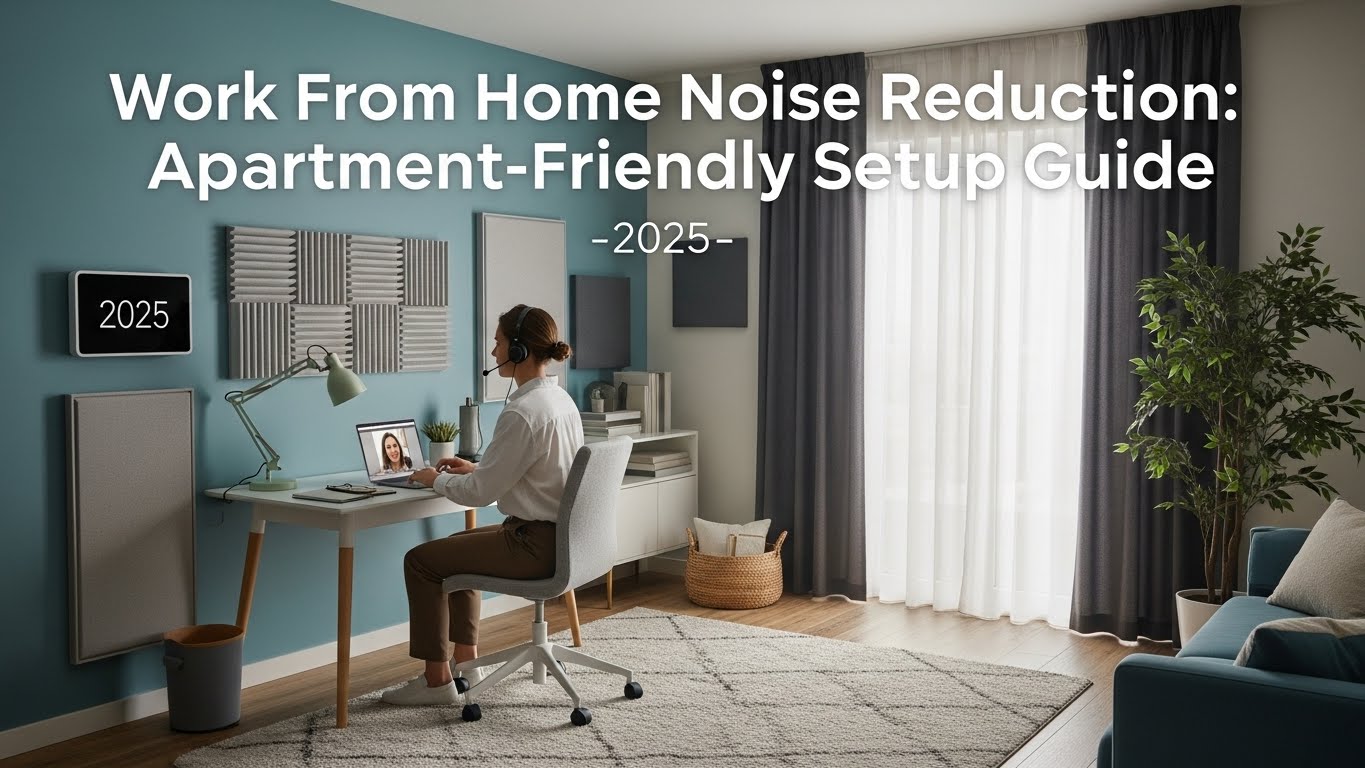
Work From Home Noise Reduction: Apartment-Friendly Setup Guide (2025)
How can I reduce noise in my home office apartment?
Apartment noise control works best with a two-part strategy: block airborne sound and reduce impact vibration.
The goal usually isn’t total silence—it’s a predictable soundscape that stops your brain from “scanning” for sudden spikes.
- Decouple the desk: Leave a small gap (a few inches) from shared walls to reduce vibration transfer.
- Add soft absorption: Rugs, thick curtains, and fabric panels reduce echo and harsh reflections inside the room.
- Seal the gaps: Door sweeps and weatherstripping help because leaks often come from edges, not walls.
- Create a baseline: A steady fan sound or white/pink/brown noise can mask unpredictable spikes.
- Use mass as a buffer: A full bookcase against a shared wall often reduces “thin-wall” sound perception.
If unpredictable noise is affecting sleep, causing frequent headaches, or making it hard to focus most days,
it’s worth treating this as a health-and-work quality issue—not just an annoyance.
Consider talking with a building manager/landlord, and if stress or sleep disruption persists, consider professional guidance.
Work From Home Noise Reduction: Apartment-Friendly Setup Guide (2025)
Last Updated: 01 01, 2026 |
Expert Review: WorkNest Workspace Lab |
Author: WorkNest Studio Editorial Team |
Note: Informational only (not medical or legal advice)
Disclaimer: This guide shares general education and apartment-friendly setup ideas.
Results vary by building construction and local rules. If you have severe stress, sleep disruption, or hearing concerns,
consider speaking with a qualified professional.
Work-from-home noise reduction becomes urgent the moment your desk shares space with neighbors, hallways, or street traffic.
The tricky part is that you don’t need “loud” noise for it to drain you—unpredictable sound is what breaks deep focus.
The biggest mistake is chasing silence. In real apartment environments, the win is building a
controlled baseline and reducing the worst spikes (footsteps, slams, sudden voices) so your brain can stop reacting.
Table of Contents
- 1) Airborne vs Impact Noise (Why fixes fail)
- 2) Desk placement: the decoupling method
- 3) Soft materials: absorption beats “foam myths”
- 4) Background sound vs silence (masking done right)
- 5) Small apartments: what matters most
- 6) Effective vs ineffective noise fixes (table)
- 7) FAQ
- 8) Internal Links
- 9) Sources & References
- 10) Professional Disclaimer
1) Airborne vs. Impact Noise: know your enemy
Apartment noise usually falls into two categories, and they behave differently—so the solution has to match the source.
- Airborne noise: voices, TV, music, street traffic. These travel through air and are improved by sealing leaks and adding absorption.
- Impact noise: footsteps, furniture movement, door slams. These travel through the building structure and respond best to layout, decoupling, and dampening.
A common frustration is doing the “wrong fix” for the noise type—like adding curtains for upstairs footsteps.
Curtains help airborne harshness, but impact noise usually needs placement and vibration control.
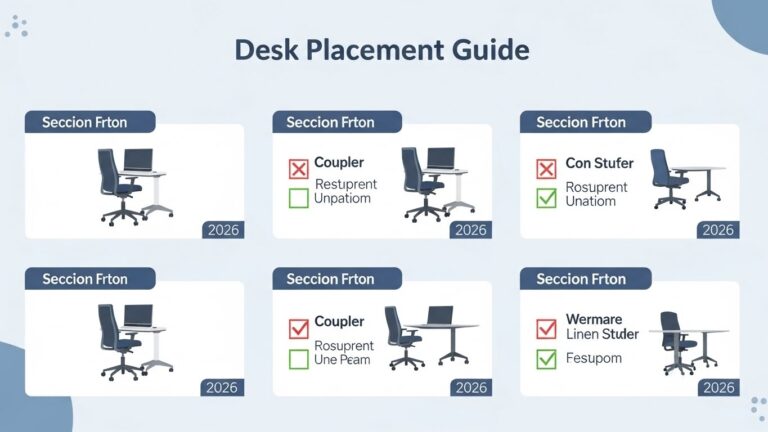
2) Desk placement for noise reduction (decoupling method)
Desk placement plays a bigger role than most people expect. A desk pressed tight against a shared wall can act like a
vibration amplifier—especially if your monitor stand, desk surface, and wall are all “connected.”
Best placement rule (when possible)
- Choose an interior wall first.
- If you must use a shared wall, leave a small gap (a few inches) behind the desk.
- Put mass (bookcase/wardrobe) between you and the shared wall when you can.
3) Soft materials: absorption beats “foam myths”
Hard, empty rooms reflect sound. That reflection makes normal noise feel brighter, sharper, and more annoying.
Soft materials don’t “soundproof” the room, but they reduce reflections and improve perceived comfort.
- Area rugs reduce floor reflection and help with “room harshness.”
- Thick curtains soften street noise and reduce echo.
- Fabric panels / filled shelves make voices and hallway chatter feel less piercing.
You usually don’t need studio foam. In apartments, ordinary textiles placed strategically often outperform lightweight “acoustic gadgets.”
4) Background sound vs silence: why “quiet” can backfire
Complete silence can make your brain hypersensitive. When everything is quiet, sudden sounds feel bigger—like your attention gets yanked.
A steady baseline (fan noise, air purifier, or white/pink/brown noise) doesn’t remove noise,
but it reduces how disruptive spikes feel—especially hallway chatter or random bangs.
Keep baseline sound low and steady. If you have to crank it to drown everything out, you’re compensating for a bigger “source problem”
(often desk placement, door gaps, or lack of soft absorption).
5) Small apartments: what matters most when space is limited
In small apartments, you can’t always separate work and noise sources. When layout is tight, focus on the two highest-leverage moves:
- Move the desk off the shared wall (even slightly) and avoid “hard coupling.”
- Control reflections with a rug + curtain combo so the room stops sounding “hard.”
After that, seal obvious leaks (door sweep, weatherstripping) and add a gentle baseline sound.
Those four steps usually get you most of the way without turning your apartment into a construction project.
6) Effective vs ineffective noise fixes
| Area | Low Impact | High Impact |
|---|---|---|
| Desk placement | Pressed against shared wall | Interior wall / slight gap + buffer furniture |
| Room surfaces | Bare floor + bare walls | Rugs, curtains, fabric panels / filled shelves |
| Door gaps | Ignore drafts and edges | Door sweep + weatherstripping |
| Sound strategy | Try to force silence | Low steady baseline + reduce spikes |
7) FAQ
Q1) Can noise really reduce productivity?
Yes. Unpredictable sound increases cognitive load and breaks concentration cycles—even when it’s not “loud.”
Q2) Are noise-canceling headphones enough?
They help, but environment fixes usually reduce fatigue long-term because your brain stops fighting the room.
Q3) What’s the fastest improvement?
Move the desk away from shared walls and add soft floor coverage (rug + pad). Those two changes often shift the whole feel of the space.
Q4) Should I aim for total silence?
Usually no. A controlled baseline plus fewer spikes tends to work better and feels more sustainable.
Internal Links
Desk Placement and Lighting Guide
Monitor Distance and Eye Level
Ergonomic Home Office Setup
Sources & References
Professional Disclaimer
medical, or legal advice. If you have persistent sleep disruption, significant stress symptoms, or hearing concerns, consider
consulting a qualified professional.
Update Log:
– Dec 27, 2025: Consolidated apartment noise strategies, added desk decoupling + soft-surface examples, and verified sources.

I’m not a medical professional, ergonomist, or workplace specialist.WorkNest exists to help everyday people build more comfortable, practical home office environments through clear explanations, visual guides, and common-sense adjustments.
Articles on this site are written from a non-expert perspective, focusing on real-world use, everyday discomforts, and widely accepted setup principles rather than clinical or professional advice.