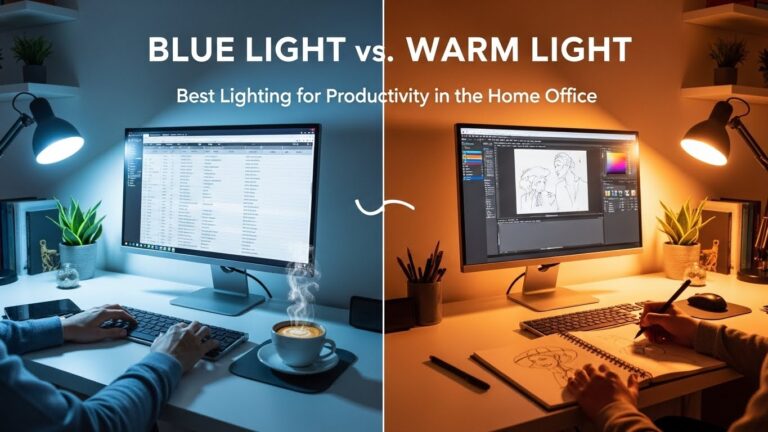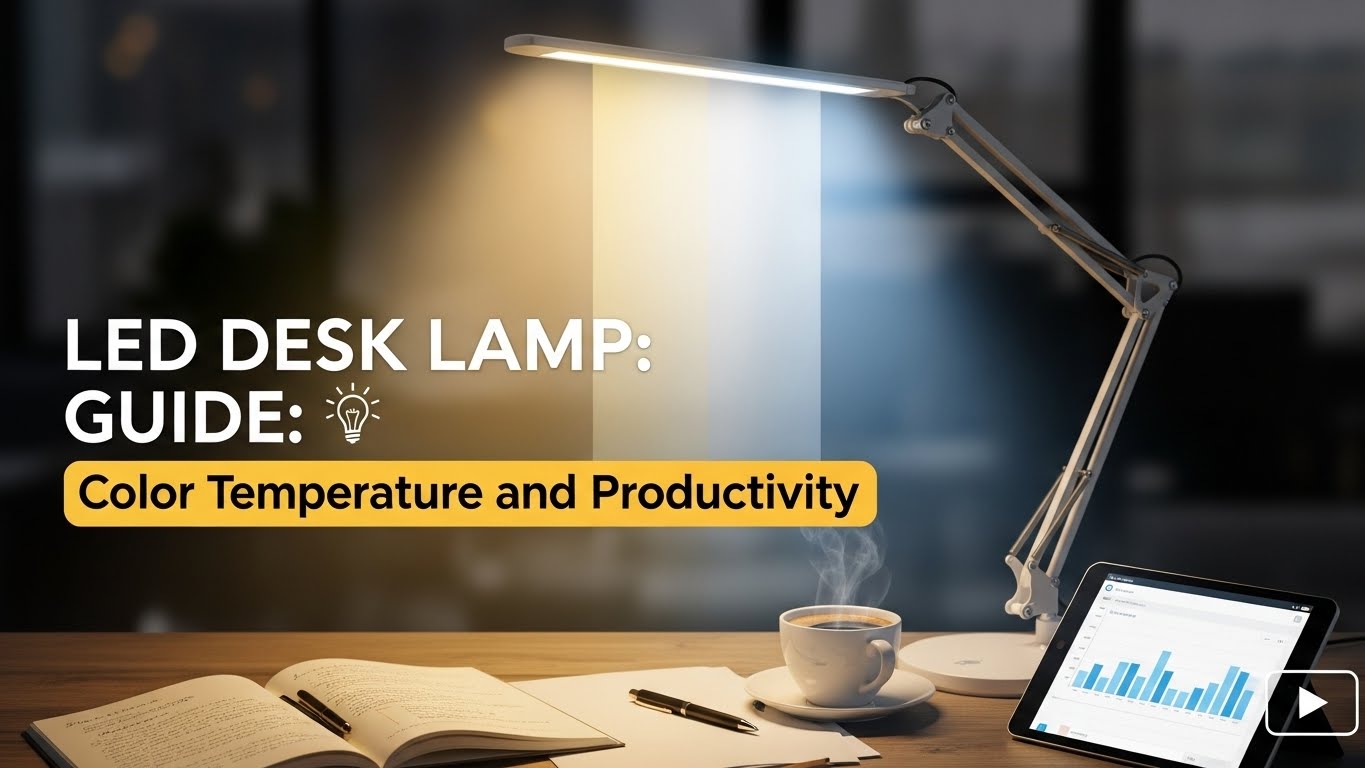
LED Desk Lamp Guide: Color Temperature and Productivity
Last Updated: 2025-12-24
LED desk lamp guide content often focuses on specs, but real productivity comes from how lighting feels during long work sessions. Many home office users only realize their lighting problem after experiencing eye strain, headaches, or unexpected fatigue. This LED desk lamp guide explains how color temperature, brightness, and placement influence focus—using lighting standards, vision science, and real-world desk experience.
Table of Contents
- Why Desk Lamps Matter More Than You Think
- Real Home Office Experience: What People Notice First
- Understanding Color Temperature
- Brightness and Visual Comfort
- Correct Desk Lamp Placement
- Why Adjustable Lamps Perform Better
- Common LED Desk Lamp Mistakes
- Quick Buyer’s Checklist
- FAQ
- Internal Links
- Disclaimer
- Sources & Research
Why Desk Lamps Matter More Than You Think
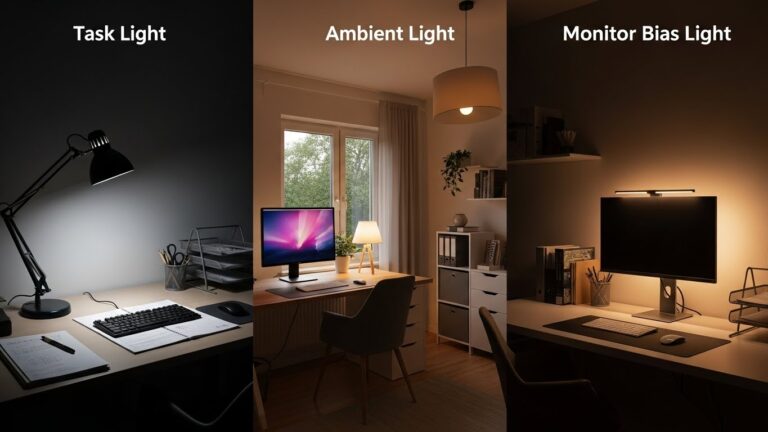
An LED desk lamp guide is essential because overhead lighting alone rarely supports focused work. Poor task lighting increases contrast between the screen and surroundings, forcing your eyes to work harder. Over time, this leads to fatigue—even if you don’t consciously notice it.
Real Home Office Experience: What People Notice First
Many people report a similar experience after switching to a proper LED desk lamp. At first, they don’t feel anything dramatic—but after a few days, eye fatigue appears later in the day, and evening headaches become less frequent. One common comment is, “I didn’t realize my old lamp was the problem until I stopped using it.”
Understanding Color Temperature
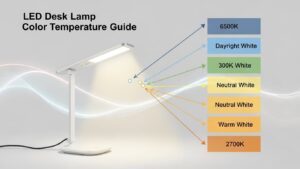
In any LED desk lamp guide, color temperature is key:
- 2700–3000K: warm, relaxing light
- 4000–4500K: neutral, balanced for work
- 5000K+: cool, alertness-focused light
Neutral light around 4000–4500K works best for long home office sessions.
Brightness and Visual Comfort
Brightness matters as much as color:
- Too dim: eye strain from screen dominance
- Too bright: glare and squinting
In practice, users often feel discomfort not because the lamp is “bad,” but because brightness isn’t matched to the screen.
Correct Desk Lamp Placement
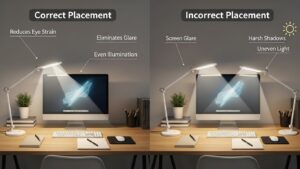
Placement mistakes are common:
- Place the lamp opposite your writing hand
- Angle light toward the desk, not directly into the eyes
- Avoid casting shadows across the keyboard
Why Adjustable Lamps Perform Better
Users who switch to adjustable lamps often mention one thing: flexibility. Being able to lower brightness at night or shift color temperature prevents overstimulation and helps maintain comfort across different tasks.
Common LED Desk Lamp Mistakes
- Using one fixed brightness all day
- Ignoring glare from exposed LEDs
- Choosing style over adjustability
Quick Buyer’s Checklist
- Adjustable color temperature
- Wide brightness range
- Flicker-free certification
- Flexible arm or head
- Stable base
FAQ
1. Do LED desk lamps reduce eye strain?
Yes, when brightness and placement are correct.
2. Is expensive always better?
No—adjustability matters more than price.
3. Should I match lamp color to screen?
Yes, to reduce contrast.
4. Are clamp lamps okay?
Yes, if stable and adjustable.
5. How long should a desk lamp last?
Quality LEDs last many years.
Internal Links
- Blue Light vs Warm Light
- Desk Placement for Minimal Distraction
- Best Desk Fans and Quiet Cooling Solutions
Disclaimer
This article provides general lighting guidance and does not replace professional medical or ophthalmic advice.
Sources & Research

I’m not a medical professional, ergonomist, or workplace specialist.WorkNest exists to help everyday people build more comfortable, practical home office environments through clear explanations, visual guides, and common-sense adjustments.
Articles on this site are written from a non-expert perspective, focusing on real-world use, everyday discomforts, and widely accepted setup principles rather than clinical or professional advice.