Blue Light vs Warm Light: Best Lighting for Productivity in Home Office
Last Updated: 2025-12-24
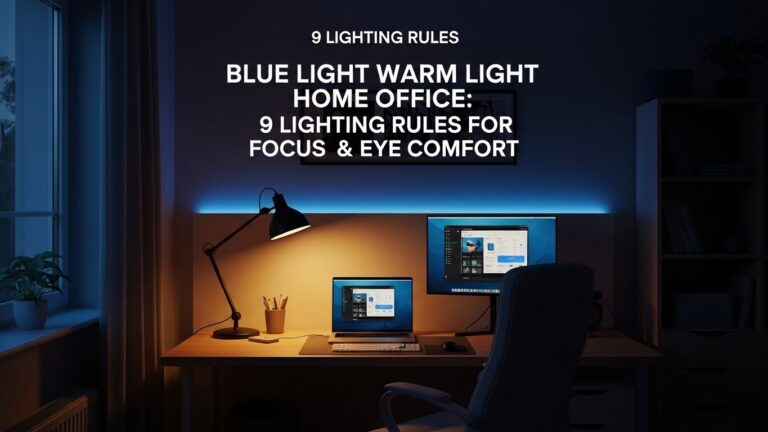
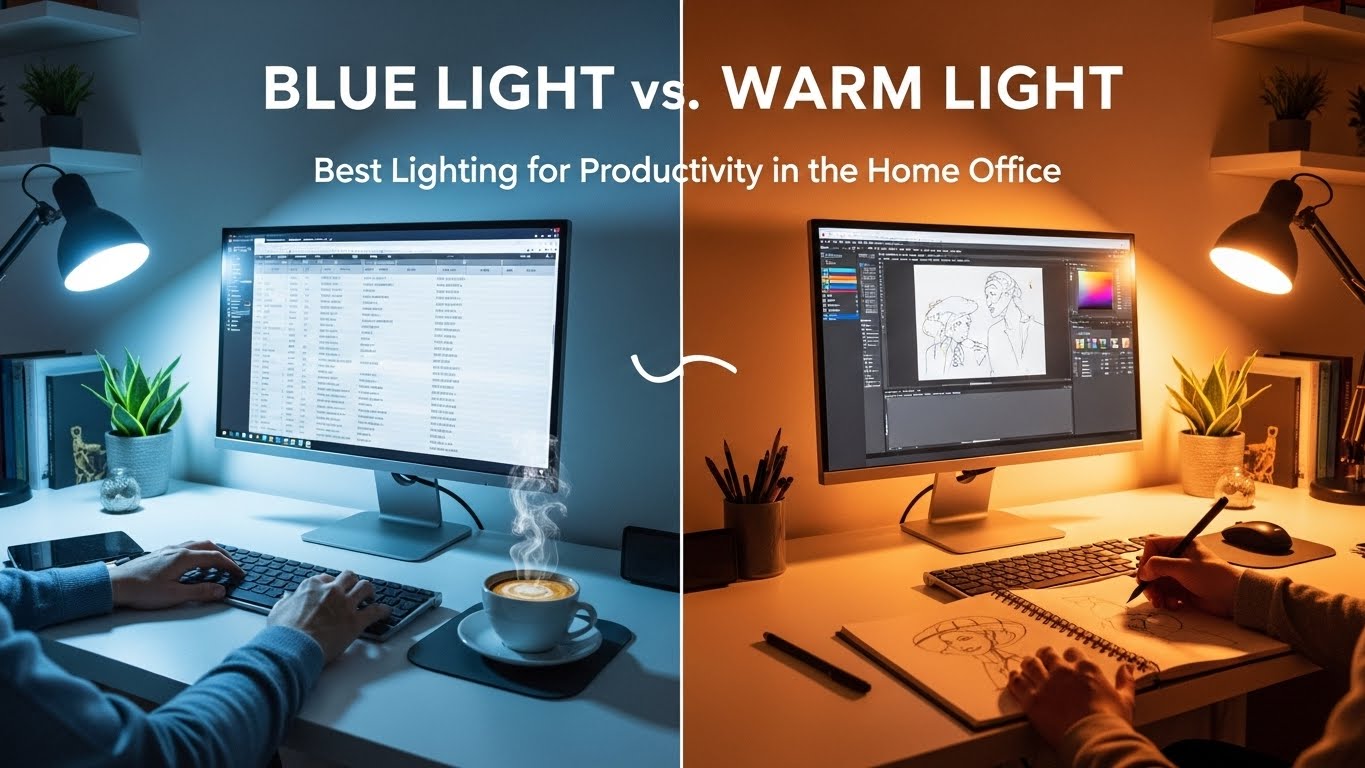
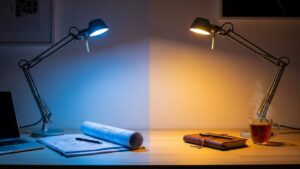
Blue light vs warm light is one of the most misunderstood topics in home office lighting. Many people assume blue light is always harmful and warm light is always better—but productivity, focus, and eye comfort depend on context, timing, and intensity. This guide explains blue light vs warm light using vision science, circadian rhythm research, and practical home office setups.
Table of Contents
- Understanding Blue Light and Warm Light
- How Light Affects Vision and Focus
- Circadian Rhythm and Work Timing
- Blue Light vs Warm Light for Productivity
- Eye Strain and Visual Comfort
- Best Light by Time of Day
- Home Office Lighting Setup Tips
- Common Lighting Mistakes
- Lighting Optimization Checklist
- FAQ
- Internal Links
- Disclaimer
- Sources & Research
Understanding Blue Light and Warm Light
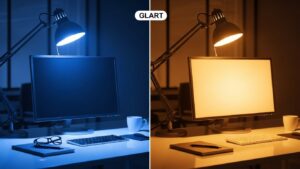
Blue light vs warm light refers to color temperature measured in Kelvin (K):
- Blue / cool light: 5000–6500K
- Neutral light: 4000–4500K
- Warm light: 2700–3000K
Higher Kelvin light appears whiter or bluish, while lower Kelvin light appears yellow or amber.
How Light Affects Vision and Focus
Short-wavelength (blue-enriched) light increases alertness by stimulating intrinsically photosensitive retinal ganglion cells (ipRGCs). This can improve reaction time and attention—especially in the morning.
However, excessive brightness or contrast, regardless of color temperature, contributes more to eye strain than blue light alone.
Circadian Rhythm and Work Timing
Blue light vs warm light matters most for biological timing:
- Blue-enriched light suppresses melatonin
- Warm light has minimal circadian impact
This is why bright cool lighting late at night can disrupt sleep quality.
Blue Light vs Warm Light for Productivity
Productivity depends on task type:
- Analytical work: 4000–5000K improves alertness
- Creative work: Neutral to slightly warm light
- Evening work: Warm light reduces overstimulation
In blue light vs warm light comparisons, flexibility matters more than choosing one permanently.
Eye Strain and Visual Comfort
Eye strain is influenced by:
- Brightness mismatches between screen and room
- Glare from uncovered bulbs or screens
- Poor lamp positioning
Reducing glare and balancing brightness reduces eye fatigue more than avoiding blue light entirely.
Best Light by Time of Day
- Morning: 4500–5000K
- Midday: 4000–4500K
- Evening: 2700–3000K
Adjustable lamps allow seamless transitions without changing fixtures.
Home Office Lighting Setup Tips
- Use indirect light to reduce contrast
- Position lamps opposite the writing hand
- Match screen brightness to ambient light
Common Lighting Mistakes
- Using one fixed color temperature all day
- Overly bright cool light at night
- Ignoring glare and reflections
Lighting Optimization Checklist
- Adjustable color temperature lamp
- Even ambient lighting
- No direct bulb glare
- Screen brightness matched
- Warm light for evening work
FAQ
1. Is blue light bad for your eyes?
No—eye strain is more about brightness and glare.
2. Should I avoid blue light completely?
No—use it earlier in the day.
3. Are blue light glasses necessary?
They may help comfort for some users, but are not essential.
4. What light is best for long work sessions?
Neutral light around 4000–4500K.
5. Does warm light reduce productivity?
Not for evening or low-intensity tasks.
Internal Links
- Best Desk Fans and Quiet Cooling Solutions
- Best Headphones for Focus and Noise Isolation
- Desk Placement for Minimal Distraction
Disclaimer
This article provides general lighting and visual comfort information and does not replace professional medical or ophthalmic advice.
Sources & Research
- NIH – Blue Light and Circadian Rhythm
- CIBSE – Lighting and Vision
- Illuminating Engineering Society (IES)

I’m not a medical professional, ergonomist, or workplace specialist.WorkNest exists to help everyday people build more comfortable, practical home office environments through clear explanations, visual guides, and common-sense adjustments.
Articles on this site are written from a non-expert perspective, focusing on real-world use, everyday discomforts, and widely accepted setup principles rather than clinical or professional advice.