Desk Drawers Under Desk Storage: 11 Ideas for a Clean Home Office
Last Updated: 2025-12-20
Desk drawers under desk storage solutions are one of the most effective ways to reclaim surface space in a home office. When desks get crowded, focus drops and clutter spreads into work zones. This guide explains how to choose desk drawers under desk storage that fit different desk sizes, work styles, and room constraints—without sacrificing legroom or comfort.
Table of Contents
- Why Desk Drawers Under Desk Storage Matters
- Types of Under-Desk Storage Explained
- Legroom and Clearance Rules
- Mounted vs Freestanding Drawers
- Best Storage by Desk Width
- Storage by Work Style
- How to Organize Drawers Properly
- Common Under-Desk Storage Mistakes
- Quick Buyer’s Checklist
- FAQ
- Internal Links
- Disclaimer
- Sources & Research
Why Desk Drawers Under Desk Storage Matters
Desk drawers under desk storage reduces visual clutter by moving non-essential items off the work surface. Environmental psychology studies show that visible clutter competes for attention and increases cognitive load. Proper under-desk storage keeps tools accessible while preserving a clean visual field.
Types of Under-Desk Storage Explained
Common desk drawers under desk storage options include:
- Mounted slim drawers: minimal depth, best for small desks
- Rolling drawer units: flexible and high capacity
- Cable trays with compartments: storage + cable management
- Hanging fabric organizers: lightweight and temporary

Legroom and Clearance Rules
Comfort comes first. Follow these clearance guidelines:
- Minimum knee clearance: 60 cm width
- Drawer depth under desk: 25–35 cm recommended
- Leave space for chair movement
Overcrowded storage leads to poor posture and discomfort.
Mounted vs Freestanding Drawers
Choosing between mounted and freestanding units depends on usage:
- Mounted: cleaner look, no floor obstruction
- Freestanding: higher capacity, easy to reposition
Best Storage by Desk Width
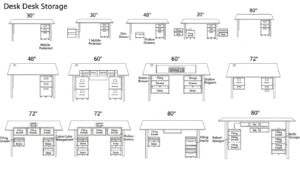
- 80cm desks: slim mounted drawer only
- 120cm desks: single rolling unit or dual slim drawers
- 160cm desks: full drawer unit plus cable tray
Storage by Work Style
Match storage to your workflow:
- Writers: shallow drawers for stationery
- Designers: larger drawers for accessories
- Remote workers: mixed storage for devices and cables
How to Organize Drawers Properly
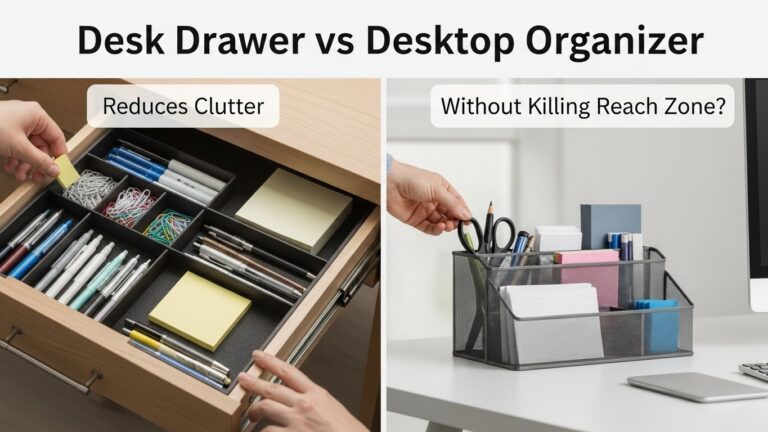
- Top drawer: daily-use items only
- Second drawer: cables and accessories
- Bottom drawer: rarely used supplies
Clear labeling prevents drawer overload.

Common Under-Desk Storage Mistakes
- Installing drawers too low
- Blocking chair movement
- Using deep drawers for small items
Quick Buyer’s Checklist
- Desk width and leg clearance measured
- Mounting method selected
- Drawer depth under 35 cm
- Weight capacity checked
- Future device expansion considered
FAQ
1. Are under-desk drawers worth it?
Yes—especially for small desks.
2. Do mounted drawers damage desks?
Most use small screws; check desk material first.
3. Can drawers affect posture?
Yes, if legroom is reduced.
4. Are rolling units better?
They offer capacity but reduce foot space.
5. How many drawers do I need?
Usually one or two is enough.
Internal Links
Disclaimer
This article provides general workspace organization guidance. It is not structural or safety advice.
Sources & Research

I’m not a medical professional, ergonomist, or workplace specialist.WorkNest exists to help everyday people build more comfortable, practical home office environments through clear explanations, visual guides, and common-sense adjustments.
Articles on this site are written from a non-expert perspective, focusing on real-world use, everyday discomforts, and widely accepted setup principles rather than clinical or professional advice.